
Short Answer
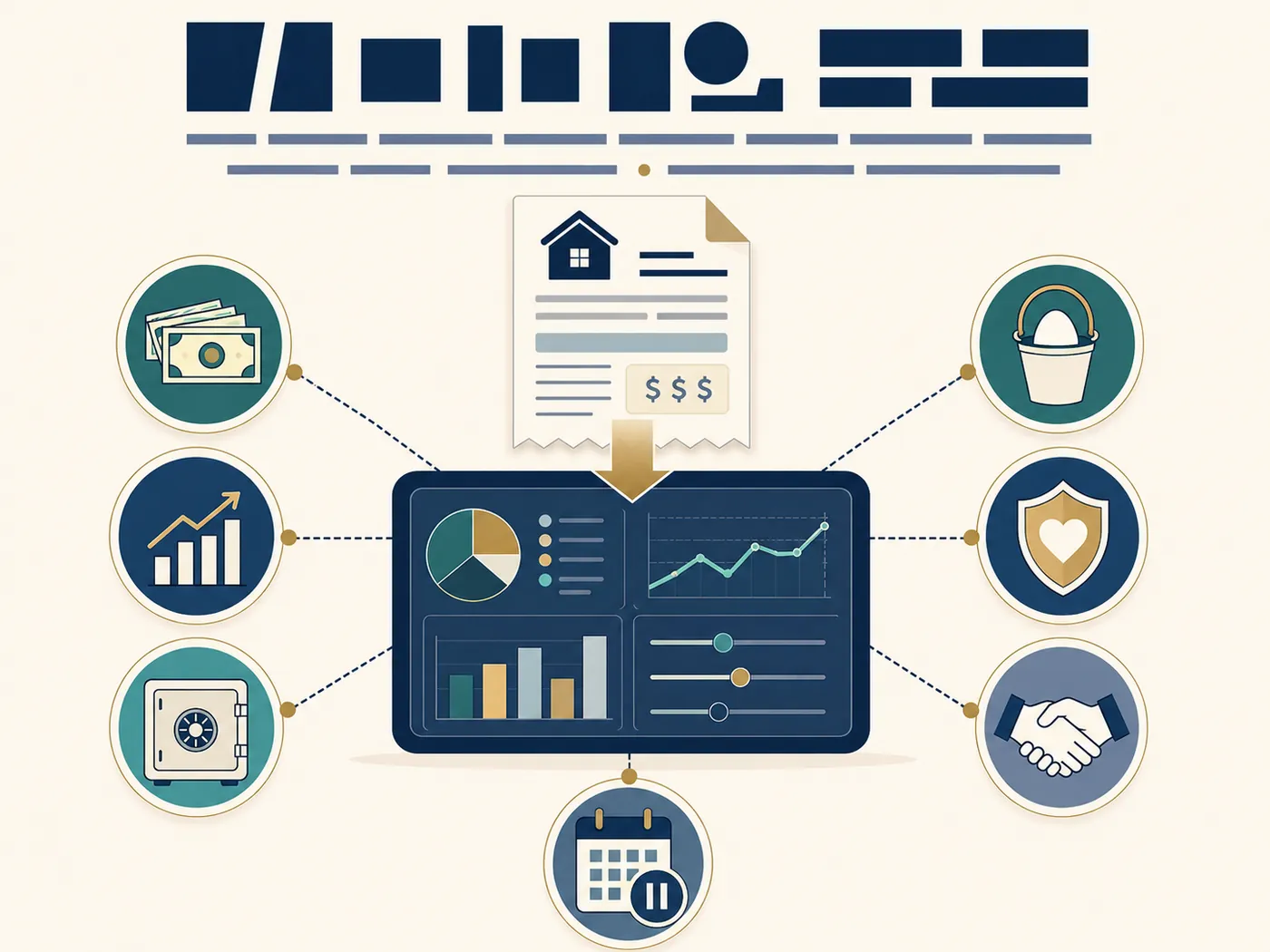
To handle a large one-time expense in retirement, compare funding sources before taking the money. Cash, taxable investments, IRA withdrawals, Roth withdrawals, HSA reimbursements, insurance, financing, home equity, and delayed spending can all affect the plan differently.
The key is to model the expense as a specific event, not average it into normal spending. A $40,000 roof, $25,000 medical bill, or $60,000 family-support expense can change taxes, Medicare premiums, future withdrawals, and cash reserves depending on how it is funded.
Key Takeaways
- Model the expense as a dated event, not as a bump in average spending.
- Separate emergency expenses from optional or flexible expenses.
- Compare cash, taxable-account sales, IRA withdrawals, Roth withdrawals, financing, insurance, and delayed spending.
- Check tax effects before making a large withdrawal, and remember the tax comes out of the money you withdraw.
- Review Medicare IRMAA exposure when taxable income rises.
- Re-run the Stress test after the expense.
- Compare funding sources by changing which account pays, one at a time.
Step 1: Define The Expense
Before deciding where the money comes from, define the expense clearly.
Ask:
- How much is needed?
- When is it due?
- Is the amount certain or estimated?
- Is it urgent?
- Is it insured?
- Is it tax-deductible or tax-relevant?
- Is it a one-time expense or the start of ongoing costs?
- Could it be delayed, reduced, or split over time?
Examples include:
- Roof replacement.
- Major home repair.
- Vehicle purchase.
- Medical bill.
- Dental work.
- Long-term care transition.
- Family support.
- Tax bill.
- Funeral or estate cost.
- Moving or downsizing cost.
The plan should treat these as dated events, not as vague additions to monthly spending.
Step 2: Separate Emergency From Optional
The funding choice depends partly on urgency.
Emergency expenses:
- Medical care.
- Essential home repair.
- Insurance deductible.
- Required tax payment.
- Safety-related vehicle repair.
Optional or flexible expenses:
- Large trip.
- Vehicle upgrade.
- Home renovation.
- Family gift.
- Major hobby purchase.
- Early mortgage payoff.
An emergency may justify using cash quickly. A flexible expense may deserve more scenario testing before the money leaves the plan.
Step 3: Compare Cash First
Cash is often the simplest source, but it still has tradeoffs.
Using cash may:
- Avoid selling investments in a bad market.
- Avoid taxable IRA withdrawals.
- Avoid capital gains.
- Avoid raising income for Medicare IRMAA.
- Reduce emergency reserves.
- Reduce flexibility for the next surprise.
Cash is useful because it buys time. But after using it, the plan should show how and whether the reserve gets rebuilt.
Step 4: Compare Taxable Account Sales
Taxable brokerage accounts can be useful for one-time expenses, but sales can create capital gains or losses.
IRS Topic 409 explains that most personal or investment assets are capital assets, and selling a capital asset can create a gain or loss based on the difference between adjusted basis and amount realized.
Before selling from a taxable account, review:
- Unrealized gains.
- Unrealized losses.
- Holding period.
- Tax bracket.
- State tax.
- Net investment income tax exposure, if relevant.
- Whether tax-loss harvesting is available.
- Whether the sale affects future income.
Two things are worth knowing about how the planner handles this. Only the gain inside a sale is taxed, split out of the withdrawal using the Pre-plan taxable gain percentage on the Edit values tab, so a sale rarely adds its full face value to your income. And that gain is taxed at ordinary federal rates rather than the preferential long-term rates, which is a deliberately cautious simplification: the projection overstates this tax rather than understating it, and the gap is widest for a low-income early retiree whose real long-term rate would be zero.
Taxable-account sales may be better than IRA withdrawals in some years and worse in others. Model both.
Step 5: Compare IRA Or 401k Withdrawals
Traditional IRA and 401k withdrawals may be available, but they can raise taxable income.
That can affect:
- Federal tax.
- State tax.
- Social Security taxation.
- Medicare IRMAA.
- Estimated tax payments.
- RMD planning.
- Survivor tax exposure.
One detail matters more than it sounds. When a one-time expense is funded from a 401k, the tax comes out of the money withdrawn, so a $60,000 draw delivers roughly $45,000 to the expense. The planner has a Withdraw extra to cover the tax option that grosses the withdrawal up instead, so the full amount arrives and the plan carries the larger withdrawal. Deciding which of those two you meant is part of comparing sources honestly.
The IRS says retirees generally have to start required minimum distributions from many tax-deferred retirement accounts at age 73. If RMDs are already required, a large withdrawal should be checked against the year's required amount and future tax picture, which planning conversions before RMDs covers.
Step 6: Compare Roth Withdrawals
Roth money can be valuable for large expenses because qualified Roth withdrawals may avoid current taxable income. But using Roth assets can reduce future flexibility.
Before using Roth money, ask:
- Is the withdrawal qualified?
- Is the account needed for later healthcare costs?
- Is the account a survivor reserve?
- Would taxable or cash sources be better this year?
- Would using Roth help avoid a tax bracket or IRMAA issue?
- Would using Roth weaken later tax flexibility?
Roth accounts can be powerful, but they should not be treated as free money. They are a planning resource.
Step 7: Compare Financing Or Spreading The Cost
Sometimes the question goes beyond which account to use. It also includes whether to pay all at once.
Compare:
- Cash payment.
- Partial cash plus partial investment sale.
- Short-term financing.
- Home equity line.
- Payment plan.
- Insurance reimbursement timing.
- Delaying part of the project.
Debt can create risk in retirement, especially if income is fixed or markets are weak, which is the wider question carrying debt into retirement works through. But spreading a cost can sometimes avoid a large taxable event, and which account you draw from is a withdrawal-order decision. Model the tradeoff instead of assuming one answer.
Step 8: Check Medicare IRMAA And Healthcare Timing
A large taxable withdrawal may affect Medicare premiums later through IRMAA rules if income rises enough, and the same rise can move what you pay before Medicare starts too, which is the pattern healthcare costs moving with income sets out. Medicare.gov provides current Medicare cost information, and SSA handles IRMAA-related notices and life-changing event requests.
Before funding a large expense with taxable income, review:
- Current Medicare status.
- MAGI estimate.
- IRA withdrawal amount.
- Capital gains.
- Roth withdrawal option.
- Timing across two tax years.
- Whether the expense itself is healthcare-related.
The planner does part of this for you. It takes the income in the year of the expense and compares it against the IRMAA threshold if you are on Medicare, or against the 400 percent FPL subsidy cliff if you are not, then reports either the crossing or how much headroom is left. Read it as a warning rather than a re-priced premium: the planner prices ACA and IRMAA off the phase average, so the flag tells you the year would cross the line without recalculating what crossing it would cost. That makes it a professional-review item, not a settled number, and official rules and tax details still matter.
Step 9: Re-Run The Plan After The Expense
After modeling the expense, check the whole plan again.
Review:
- Ending balances.
- Cash reserve.
- Withdrawal rate.
- Tax impact.
- Medicare premium exposure.
- RMD projection.
- Survivor plan.
- Stress test.
- Plan Health checks.
- Plan Confidence.
A one-time expense may be harmless in the base case and uncomfortable once returns are weaker or inflation runs hotter, which is the pair the Stress test varies across its twelve combinations.
How To Model This In The AI Retirement Income Planner
Use this workflow:
- Save the current plan into a Saved plans slot and leave it there as the untouched reference. There are three slots, so it is worth spending one on the plan you are measuring against.
- On the Lump sums tab, add the expense as a Money out event in the phase it falls in. Events attach to a phase and land at its start, because the planner projects in multi-year phases rather than single calendar years.
- Set Paid from to the account you want to test: cash, the taxable brokerage account, the 401k, or the Roth. A named account is used strictly, so if it cannot cover the expense the remainder is reported as unfunded rather than quietly taken from somewhere else.
- Decide whether to tick Withdraw extra to cover the tax, then read the note under the event showing what was paid from where and how much went to tax.
- Change Paid from to the next account and watch the same figures move. That is the comparison, and it takes seconds, so you do not need a separate saved plan for every funding source.
- For a mixed source, choose Custom split and say how much comes from each account. To spread the cost over time instead, enter two smaller Money out events in different phases.
- When a version is worth keeping, save it to a second slot and use Compare. Compare puts one saved plan next to your current plan, so work through variants in pairs, and export to JSON once you want more versions than three slots hold. Saving, reloading and comparing scenarios covers both routes.
- Review taxes, Medicare, RMD estimates, cash reserve, and account balances.
- Run the Stress test after the expense to see it across the twelve inflation and return combinations.
- Use the What-if? tools for inflation, Roth conversion size, the survivor scenario, and maximum sustainable spending.
- Compare Plan Health checks and the Plan Confidence score.
- Use Report preview with notes for professional review.
The best source is usually the one that solves the expense without creating a larger long-term problem.
A One-Time Expense Example: Paying For A New Roof
A retired couple needs a $42,000 roof replacement.
They test five versions of the same event, changing one setting each time rather than building five plans:
- Pay from cash.
- Sell taxable investments.
- Withdraw from IRA.
- Use part cash and part taxable account.
- Pay half from cash now and defer the rest to a later phase.
The cash scenario avoids tax but leaves the emergency fund thin. The IRA scenario creates higher taxable income and possible Medicare premium exposure, and unless they gross the withdrawal up, some of what they take never reaches the roofer. The taxable-account scenario creates a moderate capital gain. The split scenario keeps cash reserves healthier and limits the tax effect.
The right answer depends on their full plan. The value of modeling is that they can see the tradeoffs before the contractor invoice forces a rushed choice.
FAQ
What is the best way to pay for a large expense in retirement?
There is no universal best source. Compare cash, taxable investments, IRA or 401k withdrawals, Roth money, insurance, financing, and delayed spending based on taxes, Medicare, cash reserves, and long-term plan impact.
Should I use cash for a large retirement expense?
Cash may avoid taxes and market sales, but it can weaken emergency reserves. Model whether the reserve can be rebuilt.
Can a large IRA withdrawal affect Medicare premiums?
It can if taxable income rises enough to affect Medicare IRMAA calculations. Review the income impact with official Medicare and SSA resources and a qualified professional.
Should I use Roth money for a one-time expense?
Maybe. Roth money can help avoid current taxable income if withdrawals are qualified, but using it may reduce later tax flexibility or survivor reserves.
Can the planner compare funding sources for a large expense?
Yes, though not in the way people usually expect. On the Lump sums tab you set which account pays the expense, and the whole projection re-runs from that one choice, so comparing sources means changing that setting and reading the difference in tax, balances and the plan's later years. Saved plans hold up to three snapshots and Compare places one of them next to your current plan, so scenarios are weighed in pairs and JSON export carries anything beyond three. Financing is the exception: there is no loan or interest input, so spreading a cost is modelled as two smaller events in different phases rather than as borrowing.
Source Links
- IRS capital gains and losses: https://www.irs.gov/taxtopics/tc409
- IRS required minimum distributions: https://www.irs.gov/retirement-plans/plan-participant-employee/retirement-topics-required-minimum-distributions-rmds
- Medicare costs: https://www.medicare.gov/basics/costs/medicare-costs
- SSA Medicare and IRMAA information: https://www.ssa.gov/medicare
- Investor.gov retirement planning glossary: https://www.investor.gov/introduction-investing/investing-basics/glossary/retirement-planning
- AI Retirement Income Planner: https://airetirementincomeplanner.com/
Educational Disclaimer
This article is for general education only. It is not financial, tax, investment, legal, healthcare, insurance, Social Security, Medicare, estate, AI safety, software, or retirement advice. Confirm tax, Medicare, Social Security, RMD, withdrawal, investment, insurance, financing, healthcare, housing, and estate details with official sources and qualified professionals.